Proof of Work Hiring: Why AI Killed the Resume & What Recruiters Check Instead (2026 Guide)
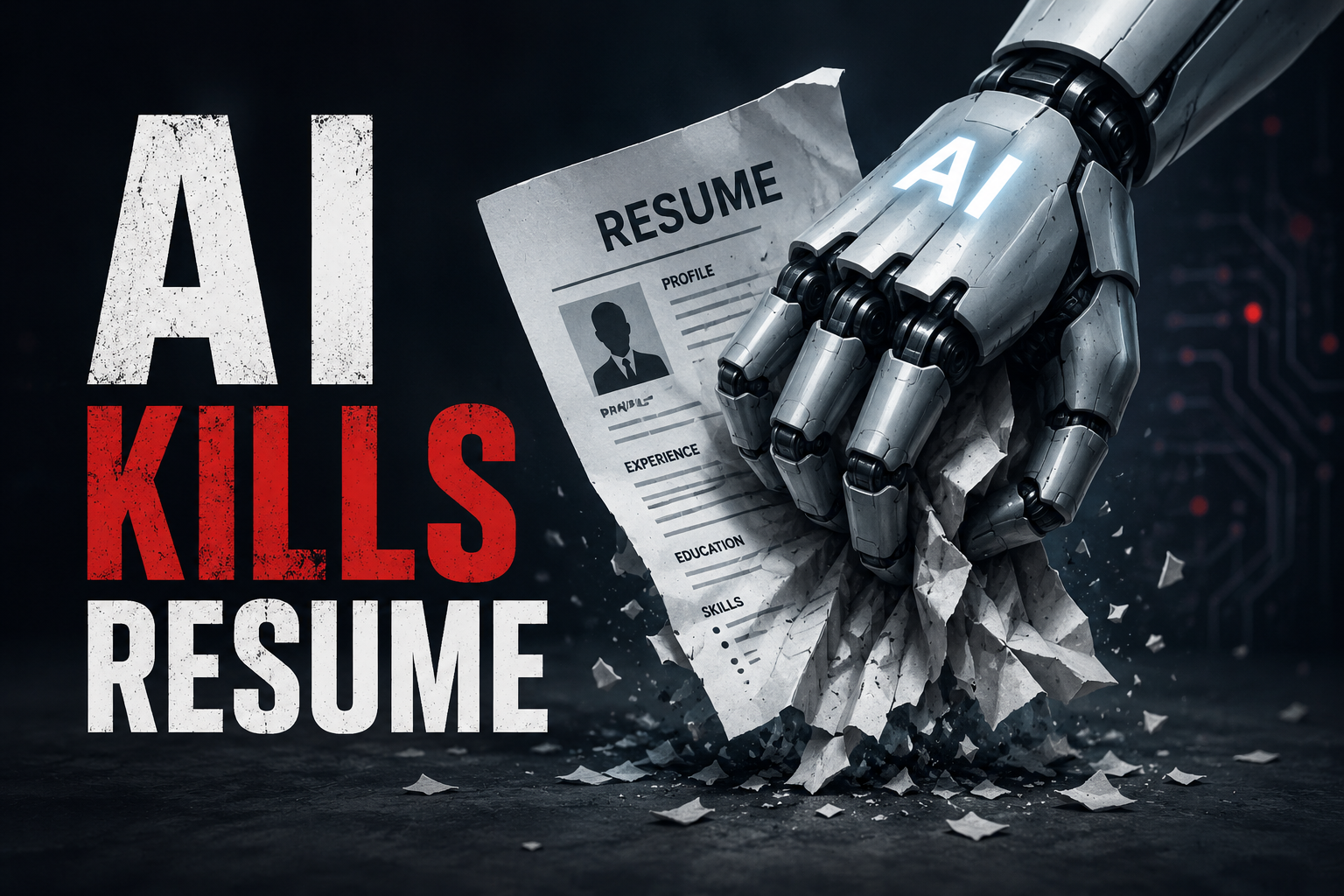
Discover why proof of work hiring is replacing traditional resumes. Learn what recruiters actually look for in software developers and how a strong portfolio can help you stand out in the AI hiring era.
AI Killed the Resume. Here's What Recruiters Check Instead
Introduction
For decades, a resume was the foundation of every job application. Job seekers carefully
crafted bullet points, listed certifications, highlighted technical skills, and tailored their
resumes for every position they applied for. Recruiters, in turn, relied on these documents
to shortlist candidates and decide who deserved an interview.
That hiring process is rapidly evolving.
Artificial Intelligence has fundamentally changed how candidates prepare for jobs.
Today, AI tools can generate professional resumes, write compelling cover letters,
optimize LinkedIn profiles, and even customize applications for specific job descriptions
within minutes. What once took hours of editing can now be completed with a few
prompts.
While this has made job applications easier, it has also created a new challenge for
recruiters.
When everyone has access to the same AI tools, resumes begin to look remarkably
similar. Buzzwords, polished summaries, and perfectly formatted achievements no longer
provide enough information to determine whether a candidate truly possesses the skills
they claim.
As a result, companies are moving toward proof of work hiring—a hiring approach that
focuses on evidence rather than claims. Instead of asking candidates what they know,
employers want to see what they have actually built, deployed, debugged, documented,
and maintained.
This shift is especially visible in software development, cloud engineering, DevOps,
cybersecurity, data engineering, and AI development. Hiring managers increasingly value
practical experience because it demonstrates problem-solving ability, technical
understanding, and the capacity to work in real-world environments.
In this guide, you'll learn why AI has changed hiring forever, what recruiters actually
evaluate before scheduling interviews, and how you can create a portfolio that makes you
stand out in today's competitive job market.
Why AI Changed Hiring Forever
Artificial Intelligence has improved productivity across almost every industry, including
recruitment and career development. Job seekers can now use AI assistants to generate
resumes, improve grammar, optimize keywords for Applicant Tracking Systems (ATS),
and prepare for interviews.
Common AI-assisted tasks include:
Creating professional resumes
Writing personalized cover letters
Optimizing LinkedIn profiles
Preparing interview answers
Improving portfolio descriptions
Generating project documentation
These tools help candidates present themselves professionally. However, they also make
it harder for recruiters to distinguish between genuine expertise and well-written
marketing.
Imagine receiving 500 applications for a software engineering role. Most resumes
mention similar technologies such as React, Node.js, Python, AWS, Docker, Kubernetes,
or SQL. Many candidates describe themselves as passionate, results-driven, and fast
learners. Because AI can generate these descriptions quickly, resumes alone are no longer
reliable indicators of technical ability.
Recruiters now ask deeper questions:
Can this candidate solve real technical problems?
Have they deployed applications successfully?
Can they explain why they chose a particular architecture?
Have they fixed production bugs?
Do they understand collaboration and version control?
Can they communicate technical decisions clearly?
These questions require evidence—not polished writing.
That evidence comes from GitHub repositories, live portfolio websites, technical blogs,
project documentation, deployment history, open-source contributions, and
demonstrations of practical skills.
This is the foundation of proof of work hiring.
What Is Proof of Work Hiring?
Proof of work hiring is a hiring philosophy that prioritizes demonstrated skills over
written claims.
Instead of evaluating what candidates say they know, employers review what candidates
have actually accomplished.
Consider two software developers applying for the same position.
Candidate A
Candidate A submits a polished resume listing React, Node.js, MongoDB, Docker, and
AWS. They mention completing five personal projects and earning several online
certifications. Their resume looks impressive, but it contains very little evidence to verify
these achievements.
Candidate B
Candidate B submits a simpler resume but includes:
A live portfolio website
GitHub repositories with consistent commit history
Deployed applications that recruiters can test
Technical blogs explaining project decisions
Architecture diagrams
README documentation
Videos demonstrating application features
Open-source contributions
Bug fixes and issue discussions
Although Candidate B may have fewer certifications, they provide far stronger evidence
of their technical ability.
Recruiters can explore the projects, review the code, examine commit history, and
understand how the candidate approaches problem-solving. This level of transparency
builds trust and significantly reduces hiring risk.
That is exactly why proof of work hiring is becoming increasingly popular.
What Recruiters Check Before Scheduling Interviews
Modern recruiters spend only a short time reviewing each application. Within the first
few minutes, they try to determine whether a candidate has demonstrated enough
practical experience to justify an interview.
Here are some of the most important factors they evaluate.
- A Professional Portfolio Website
A portfolio website acts as your digital identity. It showcases your best projects, explains
your technical expertise, and provides employers with direct access to your work.
A strong portfolio should include:
Personal introduction
Technical skills
Featured projects
Live demonstrations
GitHub links
Contact information
Resume download
Technical blog section
Unlike a traditional resume, a portfolio provides recruiters with interactive proof of your
abilities.
- GitHub Activity
GitHub has become one of the strongest indicators of continuous learning and practical
experience.
Recruiters often review:
Repository quality
Commit consistency
Project organization
Documentation
Branch management
Pull requests
Contribution history
A GitHub profile with meaningful commits over several months demonstrates
commitment far better than a single certification.
- Real Projects
Employers value candidates who have built complete applications instead of following
simple tutorials.
Projects that attract attention usually solve real-world problems and include:
Authentication
Database integration
API development
Cloud deployment
Responsive design
Security best practices
Performance optimization
Error handling
These projects demonstrate that candidates understand software development
beyond basic coding exercises.
Conclusion
The hiring landscape has changed dramatically, and the traditional resume is no longer
the deciding factor it once was. While resumes still provide a snapshot of your education,
experience, and technical skills, they are no longer enough to convince recruiters that you
can perform in a real-world environment. With AI making it easier than ever to create
polished resumes and cover letters, employers have shifted their focus from what
candidates say they can do to what they can actually demonstrate.
This is where proof of work hiring becomes the new standard. Recruiters want to see
evidence of your abilities through live projects, GitHub repositories, technical
documentation, portfolio websites, blog posts, and open-source contributions. These
assets tell a much stronger story than a list of technologies or certifications because they
showcase your problem-solving skills, consistency, collaboration, and ability to build
software from start to finish.
Whether you're a student, a self-taught developer, or an experienced software engineer
looking for your next opportunity, investing time in creating a strong technical portfolio
is one of the smartest career decisions you can make. Build projects that solve real
problems, document your development process, deploy your applications, contribute to
open-source communities, and continuously improve your skills. Every project you
complete becomes another piece of evidence that supports your expertise.
The future of hiring belongs to candidates who can demonstrate real value instead of
simply describing it. As companies continue to adopt proof of work hiring, your
portfolio, GitHub activity, technical writing, and practical experience will become the
strongest indicators of your potential. Instead of asking yourself, "How can I write a
better resume?", start asking "How can I build stronger proof of my skills?" The
answer to that question will not only help you stand out in a competitive job market but
also prepare you for a successful and rewarding career in technology.
Frequently Asked Questions (FAQs)
-
What is proof of work hiring?
Proof of work hiring is a recruitment approach where employers evaluate candidates
based on real projects, portfolios, GitHub repositories, technical documentation, and
practical experience rather than relying solely on resumes and certifications. -
Is a resume still important in 2026?
Yes, a resume is still important as an introduction to your professional background.
However, recruiters increasingly expect candidates to support their claims with realworld projects and demonstrable technical skills. -
Do recruiters really check GitHub profiles?
Many software companies and startups review GitHub profiles to assess coding style,
project quality, commit history, collaboration, and consistency. A well-maintained
GitHub profile can significantly improve your chances of getting shortlisted. -
What should a developer portfolio include?
A strong developer portfolio should include:
Live projects with working demos
GitHub repository links
Project descriptions and technologies used
Technical blogs or case studies
Contact information
Resume download
Testimonials or achievements (if available)
-
Are certifications enough to get hired?
Certifications help demonstrate your willingness to learn, but they are rarely enough on
their own. Employers prefer candidates who can combine certifications with practical
projects, real deployments, and documented problem-solving experience. -
How can beginners build proof of work?
Beginners can start by creating personal projects, contributing to open-source
repositories, documenting their learning journey through blogs, participating in coding
challenges, and building a portfolio website that showcases their progress.
Final Takeaway
In the AI era, your work is your strongest resume. Focus on building, documenting,
and sharing real projects that demonstrate your skills. When recruiters can see what
you've accomplished instead of just reading about it, you'll stand out from the crowd and
be better prepared for the future of technology hiring
Share this post